
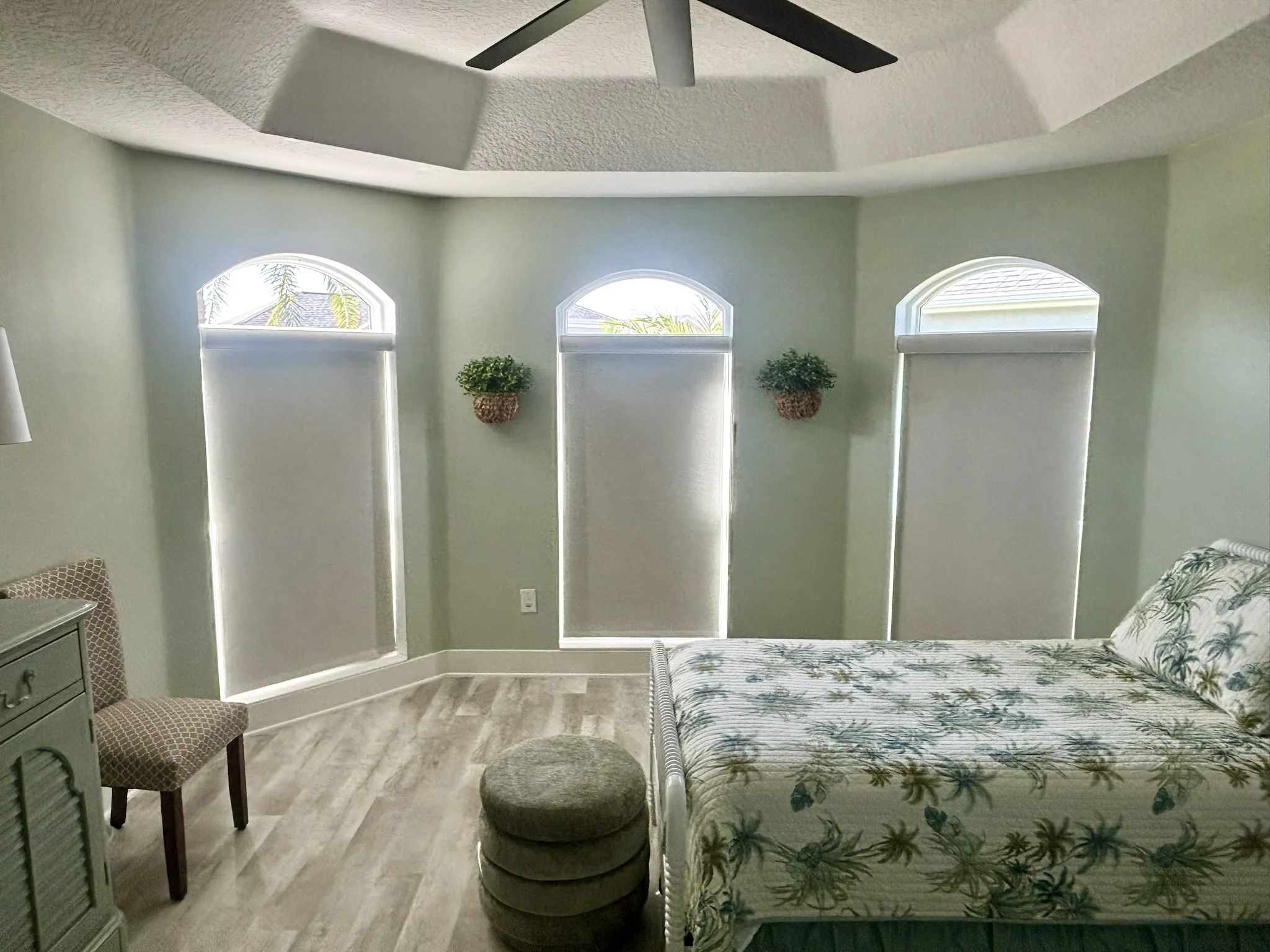
Solar, light-filtering and blackout shades all control light — but in very different ways. Here's what each one does, the rooms it's best in, and how to combine them so every window feels right.
Solar shades: see out, block the sun
Solar shades are made from an open-weave fabric that cuts glare, heat and up to 99% of UV while letting you see outside. The weave's openness factor (3%, 5% or 10%) sets how much view versus privacy you get. They're ideal for living rooms, kitchens and any window with a view worth keeping. One thing to know: because the fabric is open, they give good daytime privacy but less after dark.
Light-filtering shades: soft, private daylight
Light-filtering shades work like a lampshade — they diffuse sunlight into a soft, warm glow while keeping you private day and night. You give up the clear view but gain privacy, which makes them a favorite for living spaces, dining rooms and offices. Honeycomb shades are a popular light-filtering style that also insulates the window.
Blackout shades: true darkness
Blackout shades block virtually all light — the right choice for bedrooms, nurseries and media rooms. For edge-to-edge darkness we add side channels or a fabric-wrapped headrail so light can't sneak in around the sides. As a bonus, blocking the sun also cuts heat gain, which helps with Florida cooling bills.
Which room gets which?
A simple rule of thumb: living rooms and kitchens get solar (keep the view); bedrooms and media rooms get blackout (sleep and screens); offices, dining and street-facing rooms get light-filtering (soft light with privacy). Your windows' direction and your daily routine fine-tune it from there.
You don't have to pick just one
Many windows use two shades on a single window — a see-through solar shade for the day and a blackout or light-filtering shade for privacy and sleep at night. It's the best of both worlds, and we'll show you how it works at your consultation.
Ready to upgrade your space?
Not sure which belongs on which window? Book a free in-home consultation or call (352) 801-1586 — we'll bring samples and map it out room by room.